Tourists can't seem to stay away from bison in Yellowstone(Photo: Natalie Behring/Getty Images)
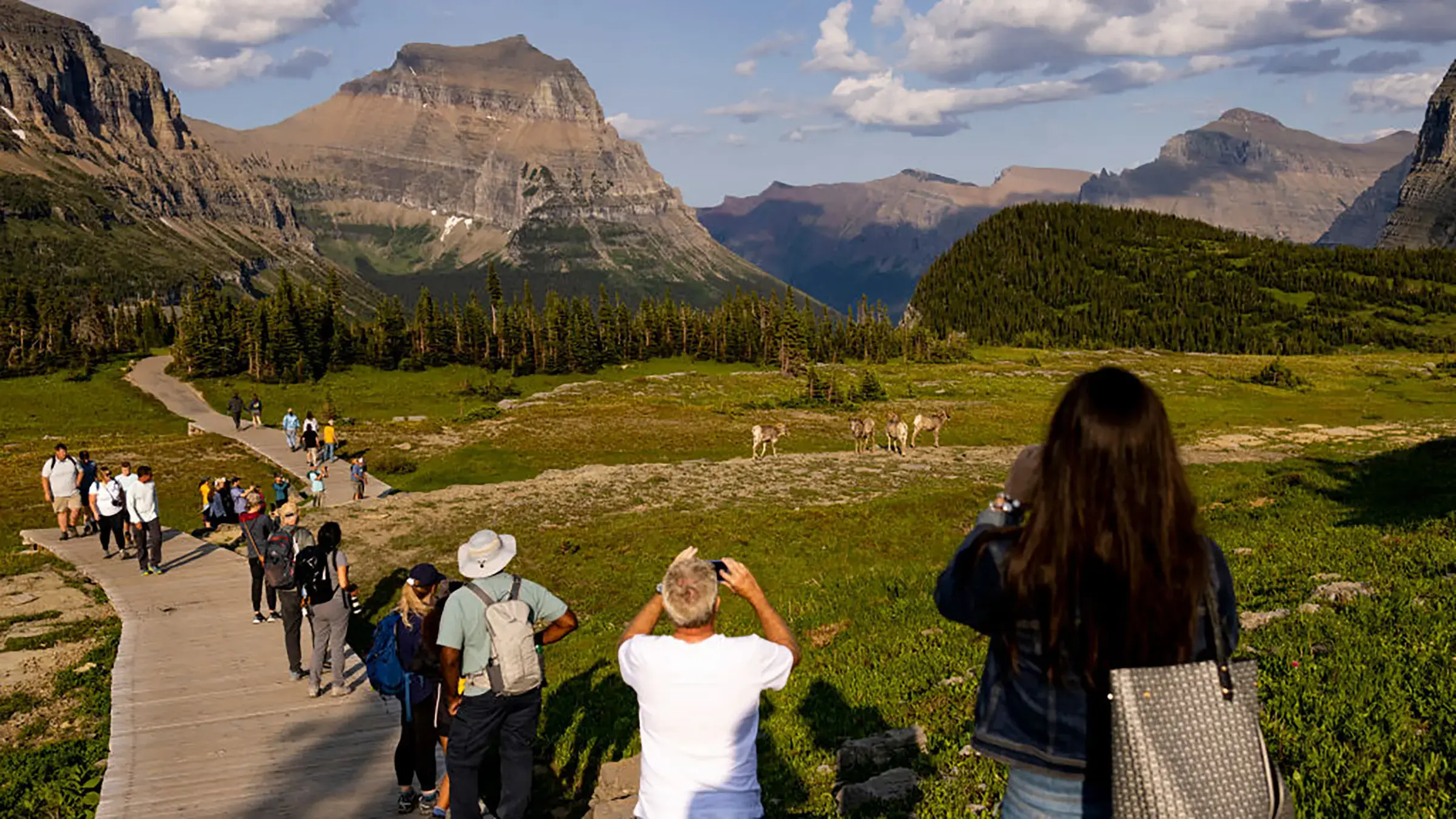
Few things inspire more clickworthy internet rage than stories about tourists who suffer consequences after doing “stupid” things. Every summer, someone else is getting gored by something with horns, tossed by something with antlers, rescued from trails they had no business hiking, or causing a domino effect of river rescues. Often, there’s a phone and a selfie somewhere in the mix.
It’s hard to say whether the average tourist today is worse than ever before, or if there’s a higher proportion of “bad travelers” than there were in, say, the 1970s. There are certainlymoretravelers than there were back then—there were 1.4 billion global travelers in 2024, andtrends suggestthis year will see even more. It’s easier, faster, and cheaper to travel today than ever before, which means travel and, therefore, rugged wilderness areas, are accessible to a much wider segment of the global population. That’s a good thing—we’re all about making it easier for people to connect with nature and have meaningful experiences outdoors. It also means that there are more people with less experience getting themselves into tricky situations because they haven’t been exposed to proper wilderness etiquette.
Thanks to our always-scrolling society, it’s harder for less-experienced travelers to make their embarrassing mistakes in private, away from prying phone cameras. Plus, no one makes headlines fornottouching wildlife, or fornotstealing artifacts from historic sites, or fornotsitting on the art at a museum. Back in the 1800s, it was common practice to hack off pieces of petrified redwoods like those atFlorissant Fossil Beds National Monument, in Colorado, as a sort of DIY souvenir.
Before you write everyone off as a brainless tourist, consider that many “stupid” and high-risk mistakes could easily be made by any one of us. It doesn’t take much to fall, trip, or slide down a mountain. Most of the “bad behavior” I’ve read about this summer broadly falls into five categories, and they’re mistakes anyone could make.
Here’s what we modern, overconfident, it-could-never-happen-to-me tourists have been up to this summer—and how to avoid making headlines yourself.
Getting Too Close to a Cliff Edge or Riverbank
Far too many tragic accidents and near-death experiences start out this way:We just wanted a cool photo…In July, aharrowing river rescueof three out of four Floridians inGlacier National Parkwas caused by one such group shot. It started when one member of the group fell into Avalanche Creek, then two of the others jumped in to try to save them. The domino effect of rescues involved two cardiac arrests requiring CPR from bystanders, plus a technical rescue team to save the third person. All are OK now, but it could have easily been much worse.
Ignoring Posted Warnings, Access Restrictions, or Clear Danger
This has been a shockingly deadly summer for hikers in Europe, withover 100 hiker deathsso far this year in the Italian Alps alone. This is partly because there are more people getting higher up into the mountains because of hotter temps at lower elevation, and partly because more of those people are less experienced.
Accidents can happen to anyone, anywhere, but you won’t help your odds by ignoring closures due to known risks. In July, a British man attempted a via ferrata that had been closed because of rockfall. Well, he got stuck thanks to falling rocks, and had to be evacuated by helicopter. He was reportedly asked tofoot the bill for the rescue, which cost the equivalent of about $16,000.
Overestimating Fitness, Ability, or Skills and/or Lack of Preparedness
We’re not trying to shame anyone for phone addiction—some people (far too many people) woulddive into a trailhead toilet to rescue their iPhone—but we would like to state for the record that phones are replaceable, and your lives (and dignity) are not. Back in April, an international student from China wasrescued from Mt. Fujitwicein four days, both times outside the mountain’s official climbing season. He first got stuck when he lost his crampons and couldn’t descend the mountain, and a rescue team picked him up by helicopter. Then, a few days later, he hiked back up to retrieve stuff he’d left behind, including his phone, and needed a second rescue due to altitude sickness.
Getting Too Close to Wildlife
For some reason, we seem to believe bison are adorable, giant stuffed animals, no more dangerous than a cow (which can actually be extremely dangerous!). As such, there is never any shortage of stories aboutenamored tourists being gored by bisonin Yellowstone, and there have beenat least two so far this year. But here’s a new one: this spring, a 29-year-old guy climbed a fence to hop into a crocodile enclosure at a wetlands park in the Philippines, evidently intending to pose for a selfie with a 2,000-pound reptile that he “mistook for a statue.” Lalay, a 15-foot crocodile, was not amused and spent half an hour thrashing around with the man’s leg clenched in her teeth, until the park owner clocked her over the head with a block of concrete to get her to let go. The man was able to retain possession of all of his limbs, and got away with just 50 stitches and some seriously traumatic memories.
Breaking Safety and Conservation Rules, Often for the ‘Gram (and Usually in Yellowstone)
How Not to beThat Tourist
It’s so easy to be overconfident and to underestimate risk, to be “that guy.” I’d venture to guess that, if you’re reading this, you’ve probably taken an unnecessary risk at least once, too. I know I have. So, how can you be better?
1. Reflect on Your Past Mistakes
I’d like to tell you I’m perfectly well-behaved, but reading these stories reminds me that I, too, have gotten too close to the edge of a viewpoint for a good photo. I’ve had close calls with cars as a cyclist who thinks she is above traffic laws, and with cyclists as a pedestrian who acts like she has outgrown the First Commandment of walking outside: look where you’re going when crossing the street.
I’ve found myself on icy trails with fading light and too few layers; in the desert with insufficient water; on rugged terrain withvery wrong shoes; and within 20 or 30 feet of a bear without an ounce of bear spray. Have you done any of these things? If so, resolve to be more thoughtful in the future. It only takes one deadly mistake to put yourself permanently out of commission.
2. Know Your Limits
It’s crucial to get comfortable with quitting, turning around, or avoiding a trail or experience all together if you’re not certain you have the skills and equipment necessary to proceed safely. Before you set off, ask yourself: Do I have the training, equipment, and resources necessary for this adventure?
3. Do a Buddy Check
Follow the lead of SCUBA divers and rock climbers who start with an essential buddy check before getting in the water or on the wall. Do you both have ample water, essential layers, a first aid kit, a map, and a clear plan for what to do when something goes wrong? Have you checked the weather, confirmed whether there are any closures or access restrictions, researched environmental hazards like flash flood or avalanche risks? Have you applied for necessary permits?
4. Let Go of the Need for a ‘Perfect Photo’—and Watch Where You’re Going
Climbing out onto a ledge for a handful of hearts on Instagram isn’t worth risking your life. It’s also not fair to other hikers to block the trail while you try to make sure no one is blinking in the group photo. Always keep your eyes on the trail, and stay aware of who’s around you. Just think about how easy it is to trip in your neighborhood while you’re scrolling while walking. It would besomuch worse to trip over the edge of a canyon.
5. Just Say No to DIY Wildlife Encounters
Even if you spot the tiniest, cutest, fluffiest baby mountain goat TikTok has ever seen, you absolutely should not touch or approach wildlife at any time, for any reason. Do not pick them up, do not touch them, do not take selfies with them, do not get between a mama and her babies, do not turn your back on nearby animals with horns, antlers, or teeth you don’t want to meet, anddo not feed them. So many of the attacks and close calls you see on accounts likeTourons of National Parksare devastatingly preventable. TheNational Park Service recommendskeeping at least 25 yards between you and wildlife at all times—and make that 100 yards if the animal in question is a bear, a wolf, or another predator much bigger and stronger than you.
6. Behave Like You’re Risking A Life—Because You Are
Remember, a rescue doesn’t impact just you. Rescuers and first responders must take risks to save people, and sometimes even the best-trained people make deadly errors.
When in doubt, act like someone else’s life depends on it.
 Georgia's Okefenokee Swamp Joins UNESCO World Heritage List—First U.S. Natural Site Added in Over 30 Years
 Think Highlining and BASE Jumping Are Only for a Few? These Guides Say They’re for Everyone.
 How a 1940s Baja Retreat Became One of the World’s Longest-Running Wellness Destinations